Monday, March 9, 2015

Social Justice Collages

Social Justice Collages
In the spirit of Romare Bearden

By Seventh Grade

Seventh graders explored the work of Romare Bearden (1911-1988), an African-American artist who worked in collage, oil paint, watercolor, and many other materials.  He created many of his collages as social justice statements during the Civil Rights movement, to celebrate and to make public the arts and culture that was taking place in predomininantly African-American areas such as Harlem. His collages captured both the struggles and the joy that African-American communities experienced during the Civil Rights movement and beyond.
  

Romare Bearden, Jamming at the Savoy, 1980-81

Seventh graders chose a social justice topic with which they feel a connection. They used collage materials such as magazines to create their own statement pieces.


Monday, March 2, 2015

Fourth Grade Cities

Fourth graders learned how to create perspective and depth in their drawings.

  • Objects higher on the page appear further away
  • Larger objects appear to be closer
  • Objects are more detailed when they are up close
  • Overlapping indicates that one object is behind another
  • When things are closer, their colors are more intense

Once they knew the technical skills, they let their imaginations take over and created a city with the theme of their choice.


Thursday, February 26, 2015

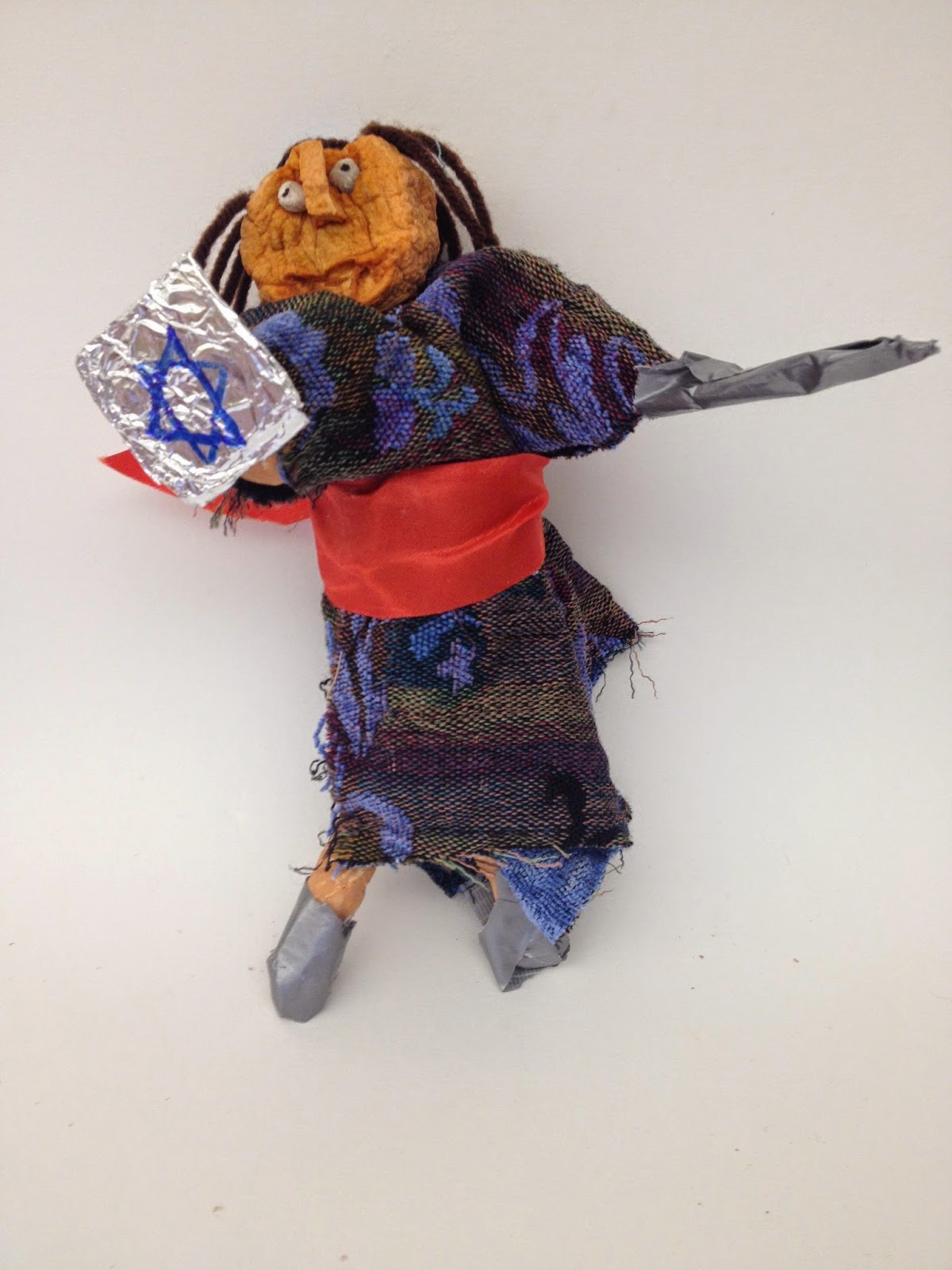
Fifth Grade Maccabee Sculptures

Fifth graders recently completed their Maccabee sculptures in time for the Hanukah holiday. This was an intensive unit that began with figure drawing. The students drew from manikins and models to learn how to capture human proportions with the goal of creating a realistic drawing. 

I have a kind of mantra for observational drawing that I like to use with students:
"Listen to your eyes, not your brain."
In other words, imagining the figure of a human could result in a stick figure drawing, but this is just a symbol. In order to draw realistically, you need to make observations with your eyes such to measure proportion, angle, and perspective. Students this diagram, in addition to the wooden manikins, as a basis for their drawings.

When they felt confident in their manikin drawing skills, they moved on and created sketches of their Maccabees. They wrote character sketch sheets with details including their Maccabee's name, occupation, and family life. Then, we moved from 2-D to 3-D with a process that included wire armature, plaster wrap, sewing, sculpting and gluing. The heads are made of apples, which the students carve and then let dry. To carry out their sketches to fruition, students used materials from yarn and fabric to tin foil and mesh. 

Finally, the students posed their sculptures in a special homemade "Maccabee photo booth," which featured scenes from Assyria. Each sculpture is full of personality and life, and I hope you'll take the time to explore them all.