Thursday, February 10, 2022

Kindergarten Verblist Art

In collaboration with their materials science unit, kindergarteners explored the characteristics of art materials by experimenting with them to create these lively multimedia works of art. 

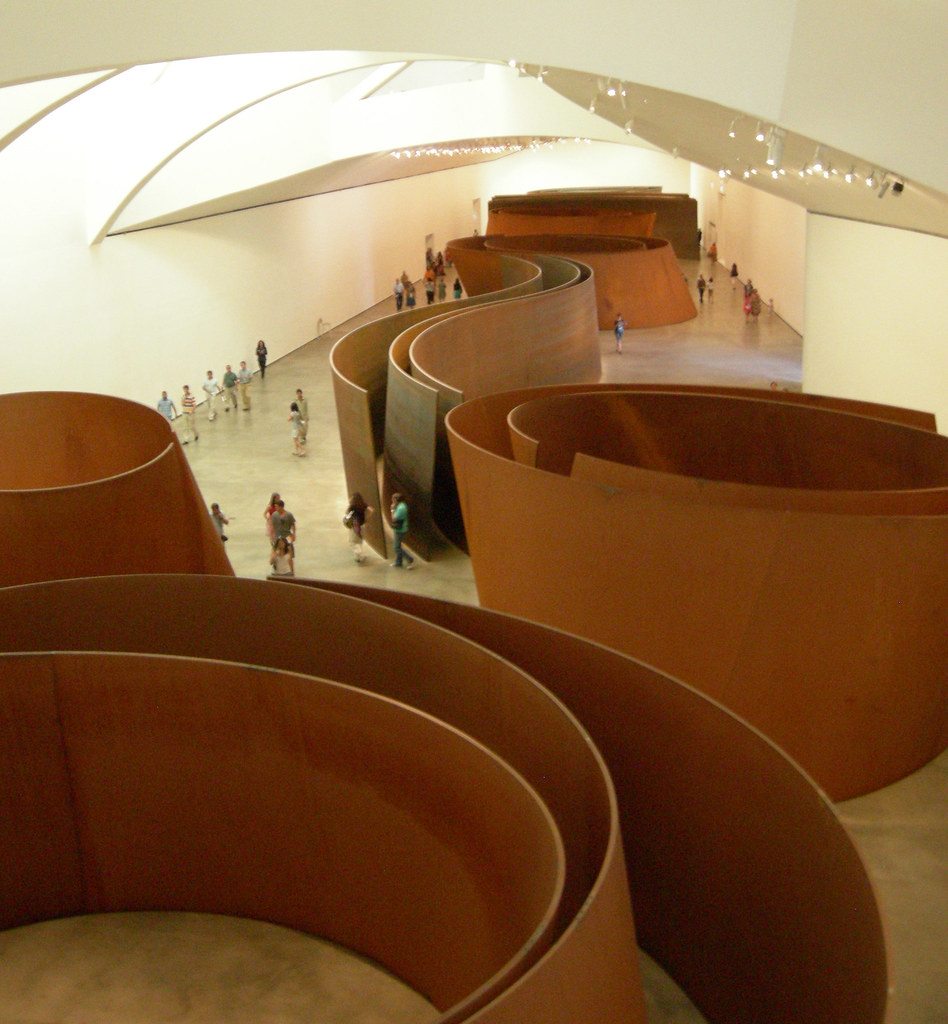
This project was based on a MOMA lesson, and inspired by artist Richard Serra’s Verblist (1967-8). Serra famously said, “Drawing is a verb.” He created a list of action words (verbs) to inspire artists to try new things with their materials. In his own sculptures, he used metal in new ways, to encircle, enclose, fold, and much more. 

Verblist, 1967-8


During this two-class lesson, I placed a wide variety of materials on the common table. Then, I gave the students one verb at a time and challenged them to find the material that they thought could best perform that action. As they chose their materials, we discussed why they thought that material was the best choice.

Sculptures by Richard Serra


Wednesday, February 9, 2022

Third Grade Landscapes and Accessibility

Third graders created these watercolor collage landscapes as part of their unit on texture. First, in conjunction with their geography studies of the Northeast, they brainstormed textures and land forms they might find in that region. Then, they learned how to create watercolor textures using techniques such as scratching, salting, and blotting their paintings. Finally, they used their texture papers to create collaged landscapes. 

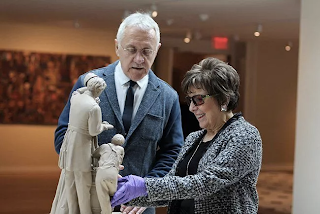
To accompany their landscapes, they also wrote descriptive poetry as a tie-in with their classroom unit on accessibility. We observed and discussed how museums make their collections accessible to blind and low-vision audiences, for example, through descriptive tours and audio guides which incorporate senses other than sight. 

InSight Tour, Smithsonian National Museum of Art

A Warm Summer Day In The Northeast


Wavy waters, crashing against the shore,

Smooth ridged trees, swaying in the summer breeze,

Rough rocks, disappearing as the tide comes in,

Brick towers, shining in the morning sun,

Sharp mountains, behind the sea,

Juicy apples from the tree,

Fluffy clouds that look like cotton candy

The Northeast is very peaceful! 

I want to climb, and sunbathe - What? What’s that you say?! Oh sure I’ll swim - I’ll swim all day!


A Night In The City


Smooth and rough night sky shines on your face, sort of whiskery, brushing against you

Tangled trees surround you, trunks rather ribbed and scaly

Frizzy grass is dimmed, but you can tell the knotty roughness around your heels means it’s still there

Flickering and bumpy lights are shining bright, just like the woven stars above you, glowing

The moon, up there it’s spiky, rough, rocky but down here it’s lacy, smooth, feathery, the creature, The Man On The Moon, waving to you as he’s controlling all the stars

Scratch cars, some crashed and banged up, traveling one way and another, back and forth at high speed

But the rocky Washington D.C. National Monument attracts most with it’s blinking, glowing red light at the top, and it’s scaly texture!!


Loud and crashing, a rocky and gritty Washington D.C. has the night taken under control

If I were in Washington D.C., I'd move into the White House!!


A Nice View In The Northeast

I feel the sleek water between my toes

There are rocks in the bumpy in the sand

The rocks are scratching my body when I’m laying on it

I see the foamy white stuff in the ocean coming to shore


There is a beach in front of my collage.

There are trees behind it because when I go to the beach there are sometimes plants.

I put mountains in because I think it looks really good .

In the back I have my sunset  sky.

I added a moon for a little light.

If I were there, I would go swimming in the ocean.


Monday, January 31, 2022

Kindergarten Lions

As part of the K-8 African art  curriculum and their unit on lines/shapes, Kindergarten students created these mixed media art projects. First, we looked at three examples of lions in African art. I pointed out the continent of Africa, and spoke of how there were more than 50 countries and 1000 languages spoken by many different groups of people. 

Although many pieces of traditional African art feature nature and animal themes, we also spoke of how there are big cities and neighborhoods as well as large natural areas in African countries. I have found that because of portrayals in movies and cartoons, many young students picture Africa as one big grasslands, when in reality there are a variety of landscapes, including urban areas. 

***Interestingly, in my own research, I found that although the lion is a well-known and much loved animal associated with Africa, it is actually not frequently represented in traditional African art. More frequently seen are animals associated with daily rural life, such as birds, elephants, and snakes. These animals are often used to represent characteristics of the ceremony for which the object is used- for example, the Bamana people's Chi Wara headdress features the neck of an antelope, as a digger to symbolize the harvest season.
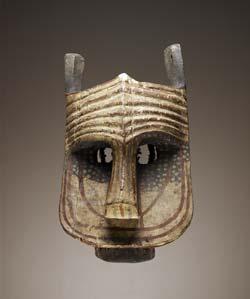
Bamana Lion Mask, Mali

Asante Drum, Ghana
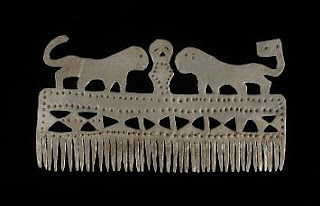
Metal comb, Kenya

Following this, Kindergarteners learned how to put lines and shapes together to draw the face of a lion. By putting different shapes together, they formed the whole picture. 

They used Sharpie and watercolor to add color to their lion. We discussed how to mix golden brown by combining brown with other colors such as yellow, orange, and red.  When we added in the element of fuzzy yarn, some students chose to create manes for lions, and others chose to use the yarn to outline their lionesses. Finally, we looked at photos of lions' habitats and identified colors to use for the sky, mountains and grasslands. 


Friday, January 28, 2022

Eighth Grade Animations

Eighth graders used pixilart.com to create these fun, engaging animated versions of their graffiti names and characters. The assignment was to create a gif where the letters had two elements of three-dimensionality, and the characters and letters interact. 


Wednesday, January 12, 2022

Eighth Grade Graffiti & Character Mural Designs

Eighth graders have spent this year learning about graffiti artists and developing their own names and characters. Using Sharpie and colored pencil, they created a design for a mural and used photo manipulation to place their murals in unexpected locations.


Tuesday, January 11, 2022

Seventh Grade Dragon Eyes

Seventh graders created these oil pastel dragon eyes with oil pastel as part of a unit on value and shading. During this unit, they practiced shading skills with pencils, colored pencils, watercolor pencils, and oil pastels.