Wednesday, March 4, 2020

Third Grade Texture Collages

Third graders have been learning about the geographical regions of the United States in Social Studies. In art class, we focused on the geography of the Southwest. This also tied into our year-long thematic unit on texture. First, they looked at pictures of the Southwest in their textbooks and brainstormed at least five texture adjectives and nouns that they saw. Then, they learned watercolor techniques for creating each of the textures. Next, they painted a piece of paper with the color and texture technique needed for each of their nouns in their landscape. Finally, they cut and ripped the textured, painted papers to create their collages. They used their brainstorming sheets to write texture poems about the Southwest to accompany their artwork. 

The Southwest
Rocky canyon
Big rocks
Spiky cactus
Go to the Southwest
Feel all the textures
Eat all the foods
Swim at the beaches
Most importantly have fun


The Southwest
Dry canyon
Tangled grass
Flowy river
Sandy desert
Rocky caves
Feathery birds
Burning sun
Cool sunset
Spiky cactus
The Southwest is unique
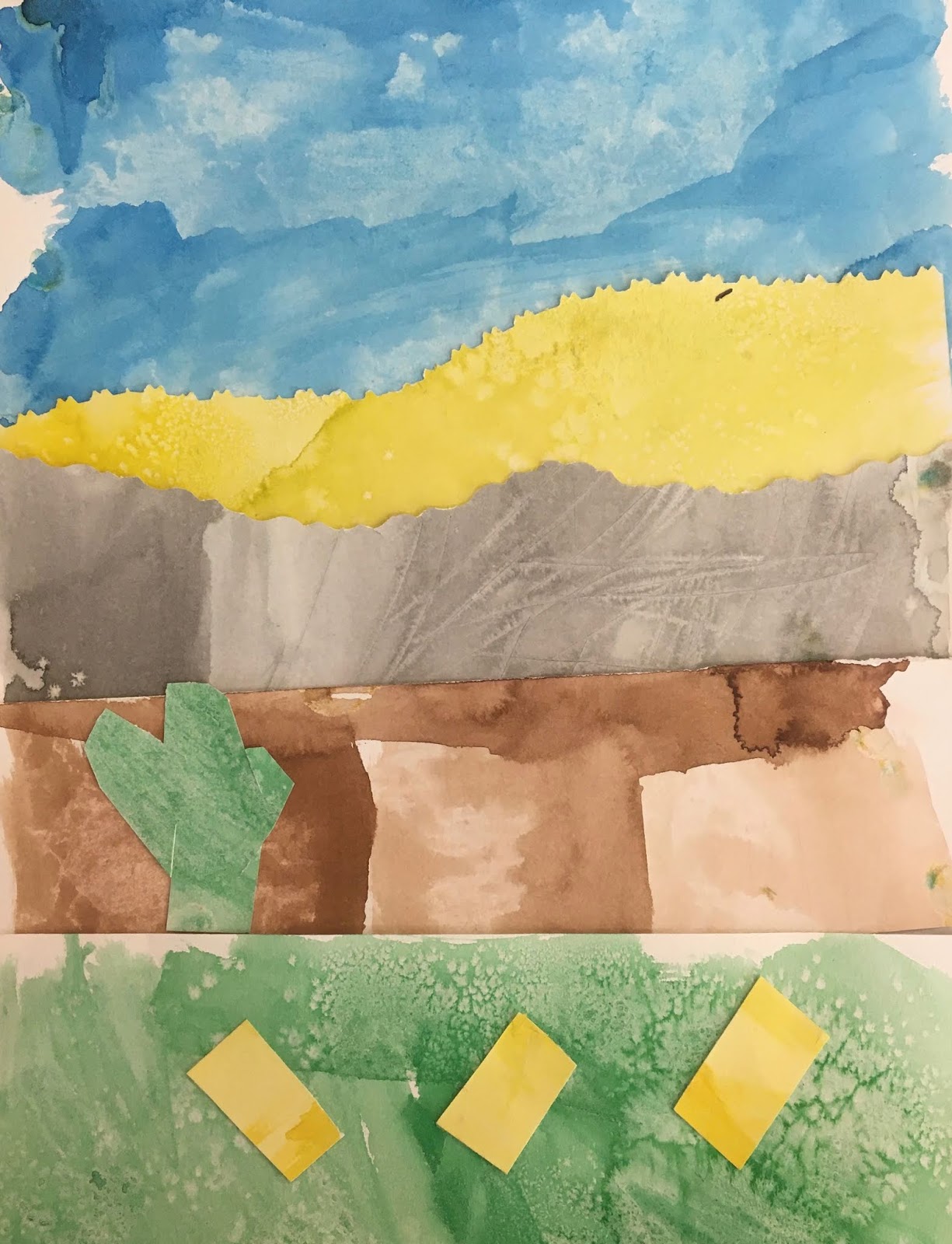
The Southwest
Bumpy canyon
Spiky cactuses
Smooth gold
Prickly caves
Smooth buffalo
Rough sky
The Southwest is a fun place to go!


Southwest
Spiky grass
Rough canyon
Smooth desert
Bumpy cacti
Jagged trees
Cloudy sky.
The Southwest is awesome!


Spiky cactus
Grainy sand
Lumpy mountains
Rigid canyon
Rocky kivas
And smooth sky
It is so hot there, you will see if you go to the Southwest.
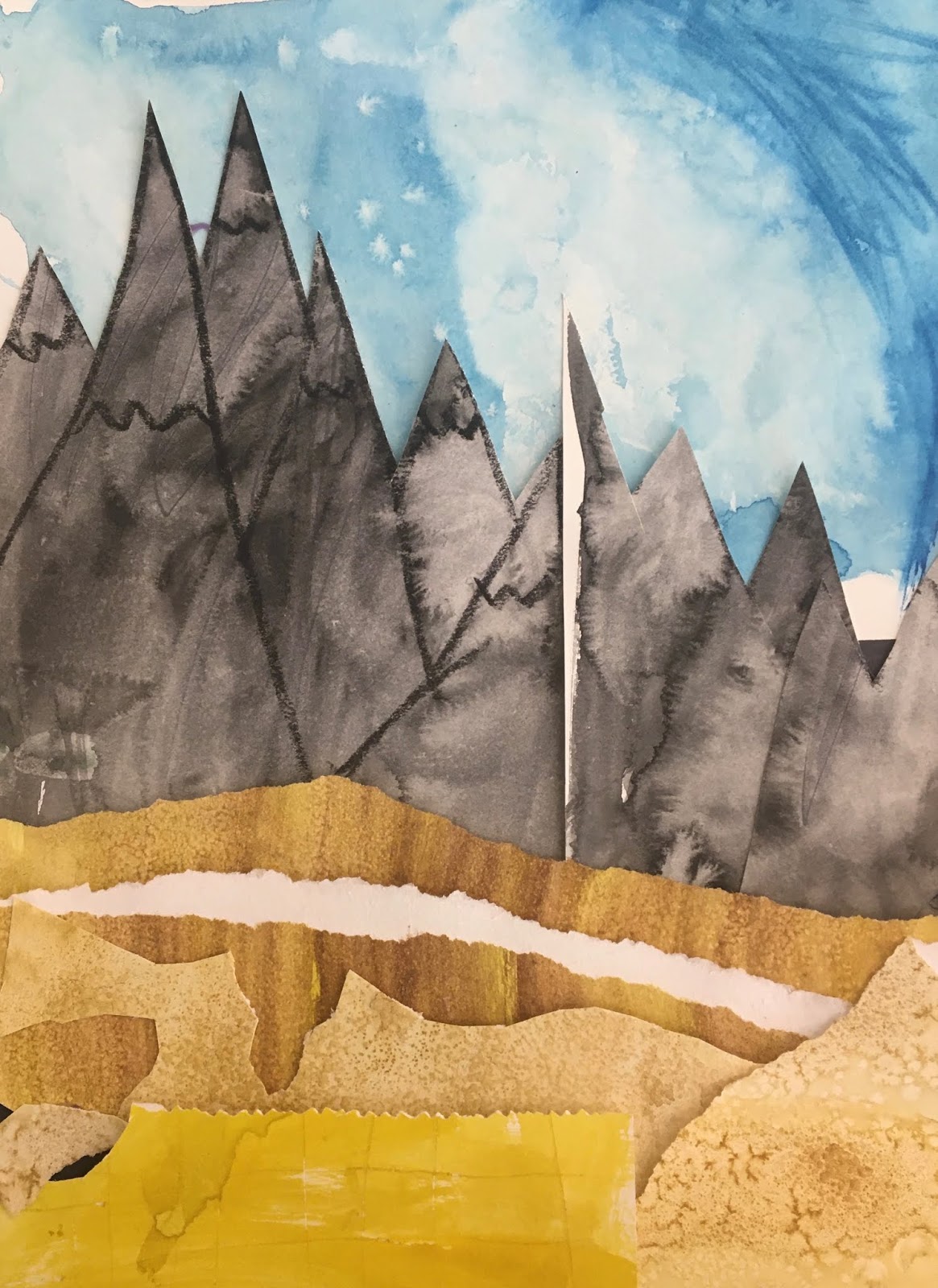
The Southwest
Rough mountain
Smooth waterfall
Spiky cactus
Rough tree
Bumpy grass
The Southwest is very hot.

Monday, February 10, 2020

Eighth Grade Graffiti Tags

Eight graders at The Rashi School learned about graffiti and street artists. We viewed and discussed artwork by Banksy, Keith Haring, Shepherd Fairey, Jean-Michel Basquiat, and the animated graffiti videos of David Ellis and Blu. Many of these artists express their political and social viewpoints through their artwork; for example, Keith Haring was an advocate for his community of HIV positive gay men, and Shepherd Fairey created the iconic Obama "Hope" poster.  

Each student researched graffiti tags, which are artist's names or nicknames. They use them to either sign their work, or sometimes the tag itself is the work. 

Graffiti-influenced art is a wonderful topic to teach to students because it allows for so much individuality and personal expression, as you can see in the examples below. 


Wednesday, January 29, 2020

Year of the Rat

Fourth graders at The Rashi School learned about the Chinese zodiac and created drawings of rats to celebrate the Year of the Rat. Then, they cut the drawings out of red paper in the tradition of intricate Chinese paper cuttings.


Wednesday, January 8, 2020

Broken/Repaired Pottery

My God, guard my speech from evil
and my lips from telling lies.
Before those who say bad things about me,
I will not respond; I will be humble.
(Elohai Netzor prayer)

Middle school students at The Rashi School created these pottery pieces in response to the Jewish Elohai Netzor prayer. First, we discussed the meaning of the prayer and shared personal responses and experiences.   We spoke about the power of words; how both negative and positive words can have a significant impact on those around us.  We talked about the challenge of “guarding our tongue” and not getting caught up in gossip and talking behind someone’s back.  In response to this discussion, students built vessels using slab construction techniques. Next, they wrote words on the vessels to express the ways, positive and negative, in which the spoken or written word can affect themselves and others. They then dropped the vessels to show the literal and metaphorical breakage that occurs when words are used for harm.

Finally, they used gold glue to repair their vessels. This was inspired by Japanese kintsugue pottery, wherein artists use gold enamel to repair broken pottery. This is done to shows that the value and beauty of the object transcends the object itself, and there is also value and beauty in the history of the object.  This also demonstrated that even when harmful words are spoken, it is our duty to try to repair the relationships that might have been hurt or broken because of them.  The repaired relationship wouldn’t look the same, but would have elements of both old and new. 

We prompted the students to think deeply and to make personal connections about the following question as they repaired their vessels:

·      What does the “gold” that we are using for repair represent in real life? How, and how much can we “fix” ourselves and others when our words do damage?
·      To what extent can your vessel, and your spirit, ever be the same when there is breakage and repair?


My God, guard my speech from evil
and my lips from telling lies.
Before those who say bad things about me,
I will not respond; I will be humble.

Open my heart to Your Torah, that I may do good in the world through mitzvot.
As for all who think bad of me—help to change their minds and their ways.
Act for Your own sake, for the sake of Your Power,
for the sake of Your Holiness, for the sake of Your Torah,
so that we, Your loved ones may be helped.
Save us with Your power, and answer me.


Elohai, n’tzor l’shoni meira us’fatai
midabeir mirmah, v’limkal’lai nafshi
tidom, v’nafshi ke-afar lakol tih’yeh.
P’tach libi b’Toratecha, uv’mitzvotecha
tirdof nafshi. V’chol hachoshvim
alai raah, m’heirah hafeir atzatam
v’kalkeil machashavtam. Aseih l’maan
sh’mecha, aseih l’maan y’minecha, aseih
l’maan k’dushatecha, aseih l’maan
Toratecha. L’maan yeichaltzun y’didecha,
hoshiah y’mincha vaaneini.

Tuesday, January 7, 2020

Fifth Grade Maccabee Sculptures

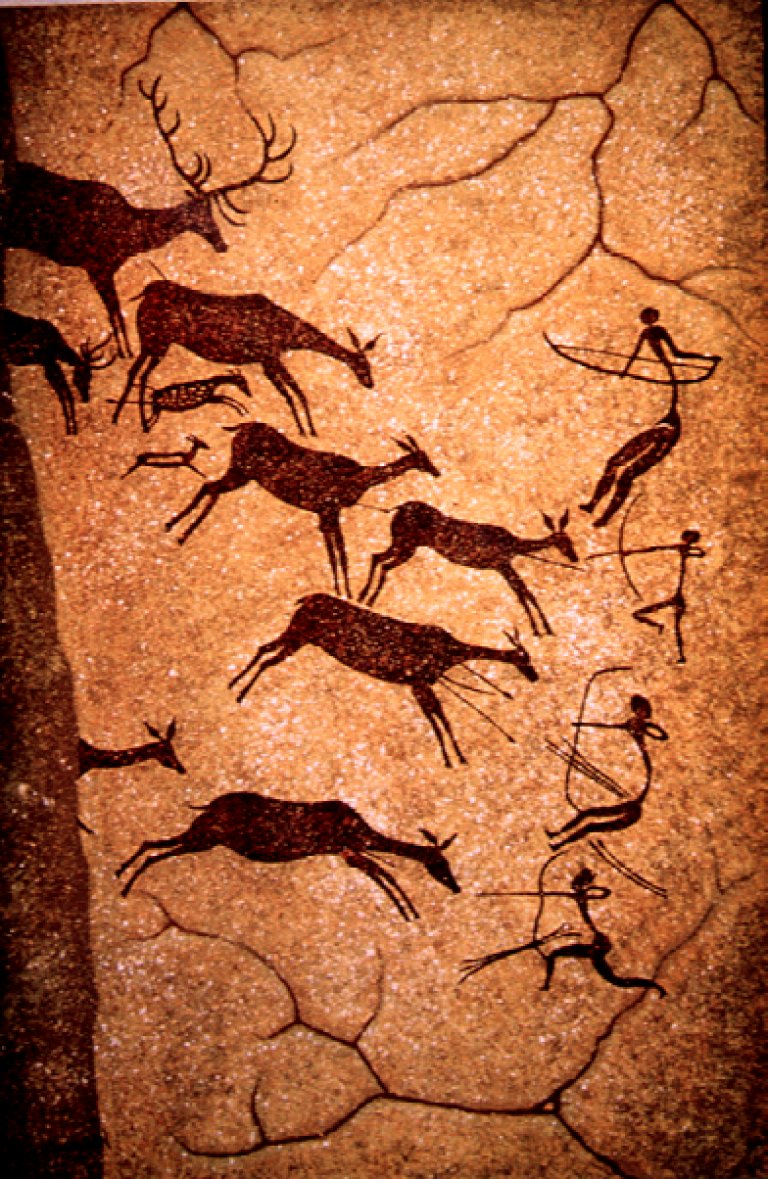
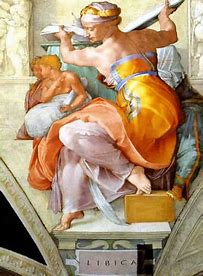
Fifth graders worked on these Maccabee sculptures for the whole semester. The unit began with an overview of the history of figure drawing. As artists learned more about the proportions of the human body, the human form in art began to look more realistic.

Lascaux caves, France 10,000 years ago

Ancient Egypt

Michelangelo, 1500

We then moved to practicing figure drawing. Students used wooden manikins as models, and observed characteristics such as leg length, width of torso, and shapes of feet facing forward. 

To begin the process of designing their Maccabee, we discussed and researched the history of Chanukah and the style of the Maccabees by consulting illustrated storybooks. Next, they sketched their Maccabee. To build it in three dimensional form, they began by sculpting with aluminum armature wire, which then covered in plaster wrap. They sculptured the heads out of model magic clay, inserting beads for eyes and gluing on yarn for hair. They also added clothes and belts made of fabric and ribbon. Finally, they used wood, tin foil, and other materials to create accessories for their Maccabees.